- Battle of Claremont Road
-
Date Posted: Sat, 11 Jul 2026
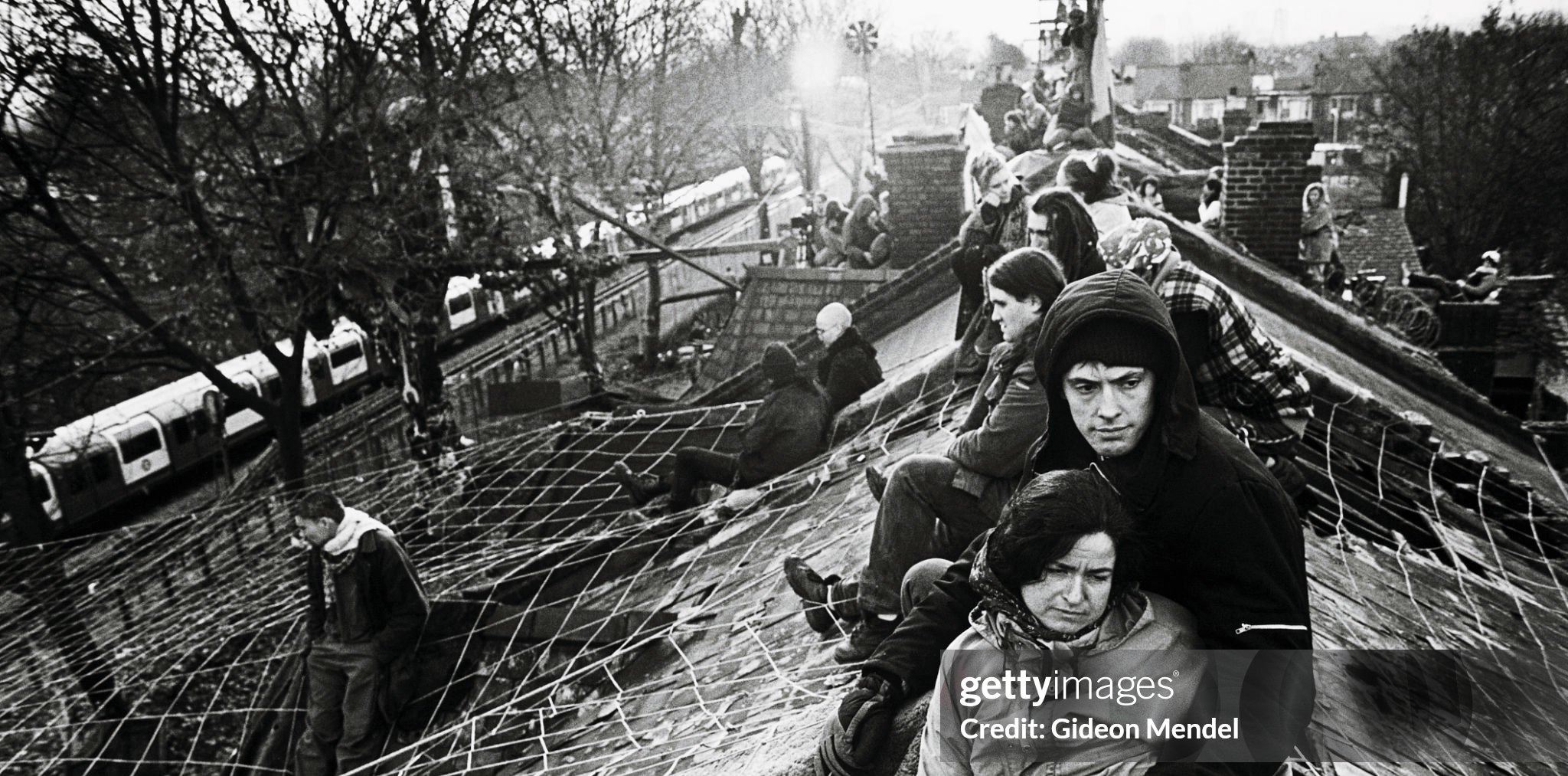
In the 1990s huge acts of resistance and hope happened here in Leytonstone, in Leyton and in Wanstead. We gathered en masse to resist the building of the M11 link road- now the A12 cutting deep through this area. Hundreds of homes were scheduled for demolition, communities divided, ancient trees cut down.
We gathered, we planned, we plotted. Alliances were formed, friendships made, lasting memories. We marched, shouted, sang. Homes left broken and empty for decades by the authorities were occupied again, streets revitalised in colour, whacky artwork, new faces, and music. Veteran road campaigners joined locals with guitars, drums, voices. A Jazz Café sprang up. Dance and rave music, folk and protest songs. There was even a raucous in-house punk protest band including one of our very own basses (the tall one!). Fortunately there were many more local people happy to join in than there were complaints against the all night racket!
One fateful morning in 1994 riot police and bailiffs moved in great force to try to quickly shift the hundreds of protestors occupying the Victorian terraces of Claremont Road, Leyton. We were ready. For months the houses, roof tops and trees had been barricaded with skill and good humour and were now filled with activists. Those of us not brave enough to occupy roof tops and the heavy duty nets strung metres above ground scampered about at street level hampering the eviction. I held hands with others in a circle amidst the chaos that day. “Let's sing!” some idiot (me) shouted. I'd like to say we sang stirring songs like those you will hear in our concert, but my memory is that it was school songs, Girl Guide songs, childhood rounds, anything we all knew quickly to belt out. It gave us courage and probably made the tougher activists laugh in what was a pretty scary situation.
All that protest, all that struggle, all the resistance was a failure. After many days of incredible acts of bravery the Battle of Claremont Rd, Leyton was over. The diggers moved in, the homes and streets were flattened, commencement of the six lane highway began, and that was that.
Except it wasn't- the huge publicity this protest (and others) brought, and the public and political reaction resulted in the cutting of the nationwide road programme, at least for some years, and caused changes in policy. It spawned a new generation of activists, many now working in climate and environmental causes (which in those days was a fringe activity, but these issues are now of course recognised as of the greatest importance)
And above all it created hope. It proved that resistance can work, whether you have the courage to stand in front of a bulldozer, or to belt out a few songs, or to simply to raise your voice.
Join us on Saturday 11th July to hear songs of resistance in our summer concert, Songs of Resistance and Hope. Click below to book your tickets.
- Wein A Ramallah
-
Date Posted: Thu, 9 Jul 2026
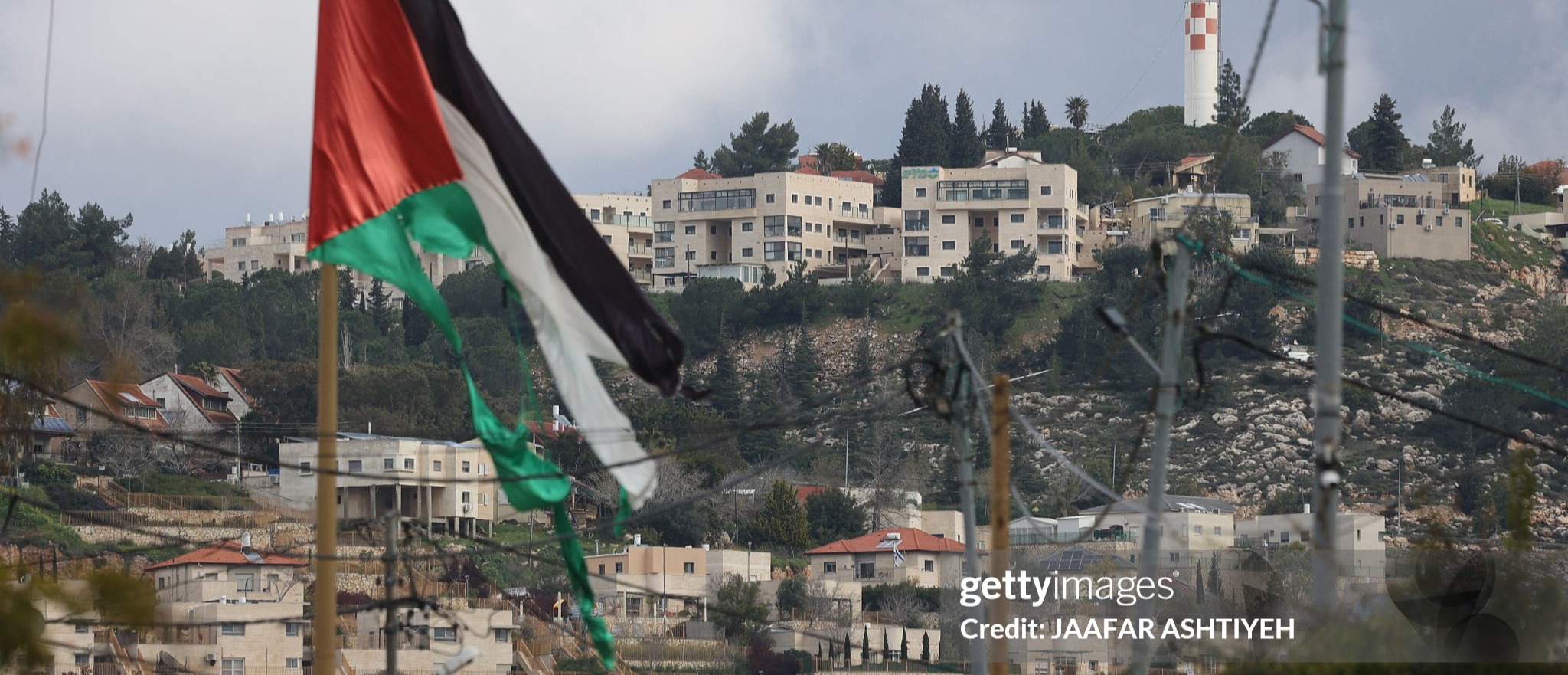
This song speaks of longing and hope and is a traditional Palestinian folk song. It references one person's desire to return to their loved one and the person's home in the Palestinian city of Ramallah.
Ramallah is a city in the occupied Palestinian Territories on the West Bank of the river Jordan. It serves as the administrative, commercial and cultural capital of Palestine.
The Palestinian Authority, the democratically elected government of Palestine, is based in Ramallah. The capital city of Palestine remains East Jerusalem, as recognised under International law.
I visited Ramallah on several occasions during my extended stay in the West Bank from 2015 to 2017. I lived with a Palestinian family in the small city of Beit Sahour, believed to be the site of the biblical story of Angels visiting shepherds at the birth of Jesus, in Bethlehem (a couple of miles from Beit Sahour).I have many friends in the region both Christian and Muslim and most if not all, have a story to tell about the Israeli occupation and its harsh consequences for everyday life.
Many families I met told stories about their families' flight from their ancestral homes in 1948 when Israel declared independence and hundreds of thousands of Palestinians were dispossessed, never to return home. Known in Arabic as The Nakba.
Many of those families still hold keys to their homes, having initially been led to believe that their exile would be short and they would return home.
One of three refugee camps in Bethlehem, Aida Camp has a moving example of giant-sized keys over the entrance to the camp, symbolising the hope that one day the refugees will return home.
During one visit to Ramallah, I was fortunate to visit the mausoleum of Yasser Arafat, the Palestinian political leader, chairman of the Palestine Liberation Organisation (PLO) and president of Palestine until his death in 2004. That visit also included a meeting with the charismatic political leader, Dr Husam Zomlot, currently Palestine’s ambassador to the UK.
For me Palestine and its hospitable people have taught me much about injustice and how hope and resilience in the face of an ever increasing hostile Israeli occupation can and is resisted often at great cost. It is my hope and prayer that one day Palestine will be free, Inshalla.
Join us on Saturday 11th July to hear this and more in our summer concert, Songs of Resistance and Hope. Click below to book your tickets.
- Born This Way
-
Date Posted: Wed, 8 Jul 2026
Stefani Joanne Angelina Germanotta was born on 28th March 1986 in Manhattan, New York City, US. Rob Fusari, music producer, began dating Stefani in May 2006 and claimed to be the first person to call her Lady Gaga, derived from the Queen song “Radio Ga Ga”.
In Lady Gaga’s words, “Born this way is meant as a direct freedom record”, affirming that everyone is born perfect and deserving of love and respect. As everyone is born unique, there should be no shame or societal pressure to conform. The song is an anthem of self-acceptance, empowerment and inclusivity. Lady Gaga wrote it in a literal and direct style so that equality would be unmistakable.
She was inspired to write it by Carl Bean, who, in 1975 wrote a song entitled “Born this way”. He was a gay black religious activist who preached, sung and wrote about being born this way.
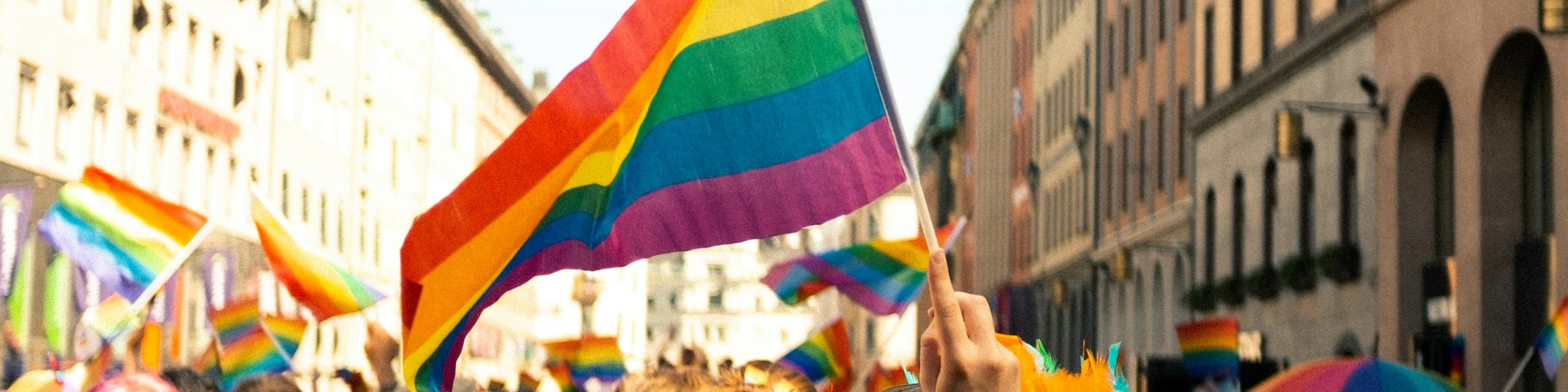
The song’s message is particularly relevant to the LGBTQ+ community, as it offers unwavering support and validation. Lady Gaga is considered a gay icon as she actively supports LGBTQ+ rights worldwide. “Born this Way” is a staple anthem at Pride parades across the UK.
"Our aim was to show that we were proud, not ashamed. Determined to come out of the shadows and stand up for our rights. We wanted to make ourselves visible and demand LGBT liberation."
So how did Pride come about?
The modern LGBTQ+ rights movement started when the Stonewall Inn Riots occurred in New York City on 28th June 1969, after police raided a gay bar in Greenwich Village. The first Pride marches took place in June 1970 on the first anniversary of the Stonewall Riots in New York City, Chicago, L.A. and San Francisco.
On 1st July 1972 the UK’s first Pride March was held in London as it was the closest Saturday to mark the anniversary of the Stonewall Riots of 28th June 1969. 2,000 people attended. Pride has grown into a worldwide movement, and events feature parades, rallies, festivals and gatherings celebrating LGBTQ+ culture and advocating for equality. June is widely recognized as Pride month, highlighting the contributions and resilience of the LGBTQ+ communities.
Peter Tatchell said about the first Pride event, “Our aim was to show that we were proud, not ashamed. Determined to come out of the shadows and stand up for our rights. We wanted to make ourselves visible and demand LGBT liberation.”
There is an ongoing struggle for the LGBTQ+ community, particularly for their well being and rights in society. We know that everyone should be treated with dignity and respect, but this doesn’t always happen. Lady Gaga launched the Born This Way Foundation in 2012, a non-profit organization that focuses on youth empowerment.
The song ‘Born this Way’ asks for compassion and understanding towards others. To accept themselves and those who are different to them. The song promotes a vision of an inclusive, tolerant society, where everyone feels safe and valued. Now wouldn’t that be something?
Lifter upper, genius, compassionate, caring, supportive, superstar, artist, activist, spectacular and ultra-glam camp are just some of the words I’d use to describe Lady Gaga. She was born this way!
Join us on Saturday 11th July to hear this and more in our summer concert, Songs of Resistance and Hope. Click below to book your tickets.
- We Shall Overcome
-
Date Posted: Tue, 7 Jul 2026
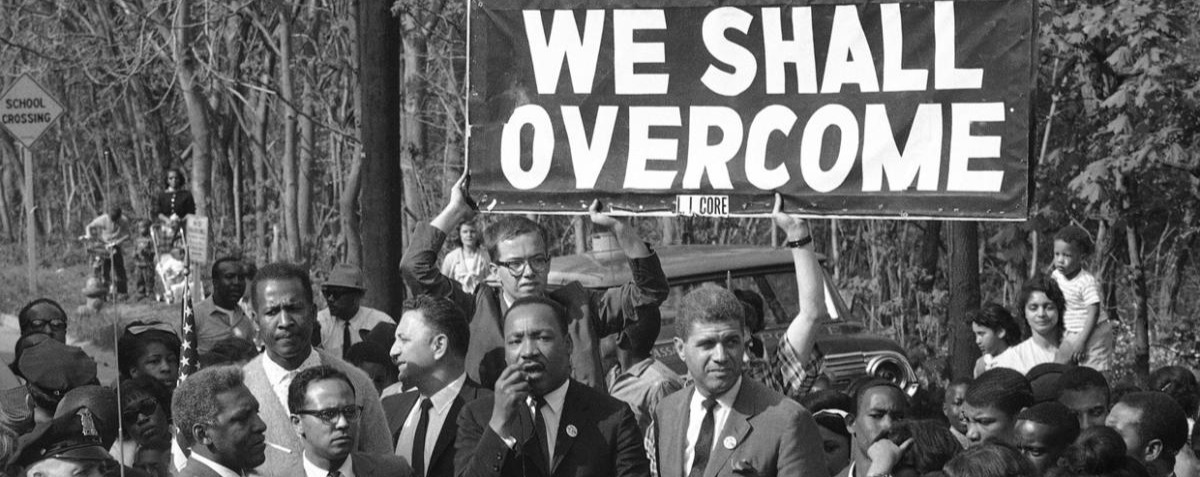
It's not much of a song. Repetitive lyrics and a simple melody. But that's exactly what makes it such a great protest song. After you've heard one verse you know the tune, and also know that if you hear the first line of a verse you know how to sing the rest. So as a call-and-response song it can be sung by thousands at a protest march or demonstration with no preparation or assumptions.
The exact origins of “We Shall Overcome” are obscure. It traces its ancestry to a 19th C American hymn “I'll Overcome Someday” by Charles Tindley via a protest song sung by striking tobacco workers in S. Carolina in the 1940's. It was introduced to the world of folksong revival by Zilphia Horton – musical director of the Highlander Folk School, a radical education and training centre in Tennessee – via the People's Song Bulletin in 1947 as ‘We Will Overcome'.
Some time in the late 1950's two doyens of the US folk movement, Pete Seeger ”If I Had a Hammer”, “Where Have All the Flowers Gone ?”… ) and Guy Carawan, got hold of it, changed it to ‘We Shall Overcome' and added some verses. The timing was just right. Pete Seeger was relaunching his career after a period of blacklisting. The burgeoning civil rights movement needed an anthem. Others, particularly Joan Baez, also recorded versions of the song. They didn't say that then – but it went viral.
"Deep in my heart I do believe that we shall overcome someday."
From the protests and rallies of segregationist America it went, often in translation, to the barricades of Prague and Paris, the civil rights movement in Northern Ireland, the independence movement in Bangladesh. Just about everywhere. I probably first sang it at a CND, or Vietnam war, or anti-apartheid event in the early 70's. Or maybe as an entitled student protesting that Margaret Thatcher had frozen my student grant.
It's not sung as much nowadays. I don't remember it from Anti Nazi League rallies or Rock Against Racism events. But it's still there when we need it. A simple song affirming solidarity and promoting peace, justice and equality.
And Pete Seeger is one of my heroes. He taught me to play the banjo with his seminal book “How to play the 5 String Banjo” over 50 years ago, He died in 2014 at the age of 94. A couple of years later I celebrated his life by choosing him as a specialist subject on Mastermind.
Join us on Saturday 11th July to hear this and more in our summer concert, Songs of Resistance and Hope. Click below to book your tickets.
- Bella Ciao
-
Date Posted: Mon, 6 Jul 2026
Many of us would be familiar with Bella Ciao as an Italian song of resistance against the Nazis during WW2. Italian musical historians trace it back to a folk song sung in the late 19th century by Italian female agricultural workers, the Mondine, whose back-breaking work was to clear the weeds from newly flooded and planted rice fields in the Po Valley of Northern Italy, from April - June. The Mondine versions – there were many – lament the hardship and exploitation of the women by the padroni, who recruited them from the poorest families and Italian immigrants in the region. Dissatisfaction with terrible working conditions, low pay, long working hours led to riots and rebellious movements in the 20th century. The earliest written Mondine version appeared in 1906.
As a song of resistance, Italian historians debate whether the WW2 version was ever actually sung during the war by partisan brigades fighting the fascists. The first publication of the lyrics of this version of Bella Ciao was in 1953 in the magazine La Lapa. Both the Mondine and Partisan versions were first recorded in 1962 by the Italian folk singer Giovanna Daffini, produced by Gianni Bosio and Roberto Leydi. But it was the 1963 version by Yves Montand, an Italian-born French actor, that brought it to wide attention. In 1964 his version was sung by the group Il Nuovo Canzoniere Italiano at the Festival dei Due Mondi at Spoleto both as a song of the Mondine and as a partisan hymn.
"It is a song about sacrifice and a pleading that this sacrifice for love of country, for love of justice and freedom, is never forgotten."
Since then, the song has lived an international life, and has been translated into at least 47 languages, including Arabic, Bengali, Burmese, English, Esperanto, Hindi, German, Russian and my mother tongue, Tagalog. It has been covered not just by folk singers but also by punk rock bands such as Croatian Kud Idijoti, ska punk band, Banda Bassotti, folk rock, Modena City Ramblers, American rock band, Ozomati. The Swiss band Klischee released an electro swing version, Amparo Sanchez and Juan Pinilla released a Flamenco interpretation, American hip hop artist Hopsin sampled Bella Ciao in 2021, and a flash-mob Bella Ciao reel by pianist Julien Cohen is making the rounds on Instagram.
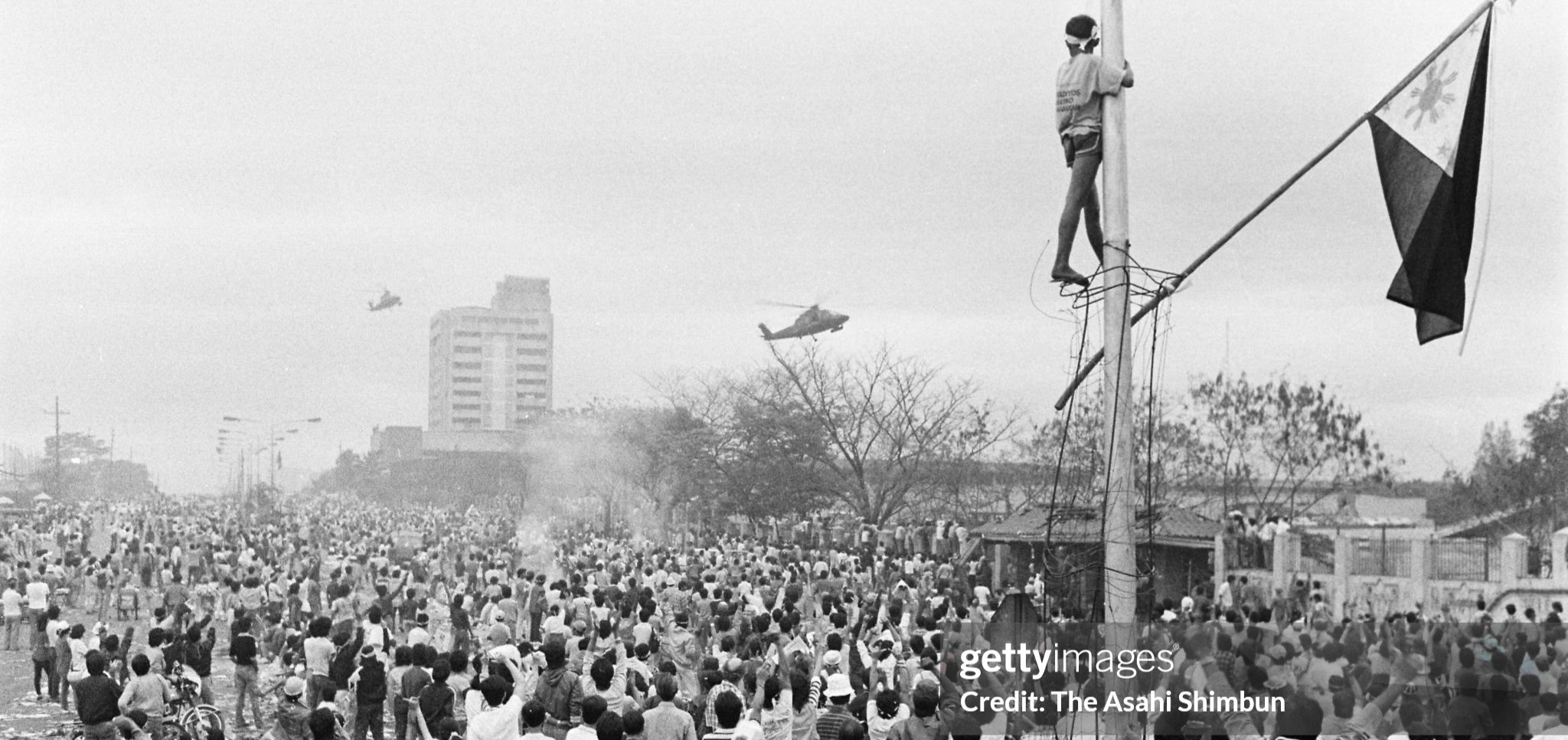
I first sang the Tagalog version of Bella Ciao – the partisan version – in the mid-80s, when I was a young political activist working to topple the Marcos dictatorship in the Philippines. Workers, peasant farmers, students, intellectuals, church people, business people – we all were organising and fighting for regime change, defying the brutal war that Marcos and his army waged against us, the people. Romulo Sandoval, a Filipino revolutionary poet, who died in 1997, translated the version I sang then.
Bella Ciao rang out in the streets of Manila during marches and demonstrations, in defiant student concerts, where I first heard and learned the song, and in quiet moments when my comrades and I were exhausted, maybe weary and hungry, as we regrouped in the evenings back to our safe houses.
Bella Ciao – you can belt out the chorus in protest and anger at the injustices in the world, thus its near-global appeal. The original Mondine versions were indeed cries against poverty and oppression. But the partisan version sings of the partisans expecting death, not knowing if their actions will help win the war or not. It is a song about sacrifice and a pleading that this sacrifice for love of country, for love of justice and freedom, is never forgotten. A message that is as relevant now as it was then.
Join us on Saturday 11th July to hear this and more in our summer concert, Songs of Resistance and Hope. Click below to book your tickets.